Hans Vestberg and Mario Gabelli: Telecommunications Leadership Meets Wall Street Value Investing
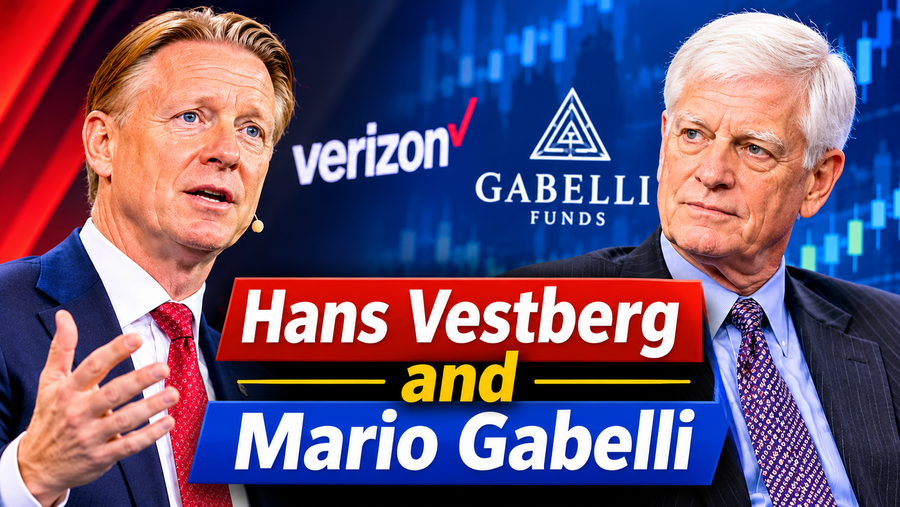
TL;DR: Hans Vestberg runs telecom powerhouse Verizon, while Mario Gabelli built GAMCO Investors into a value-investing powerhouse. This deep-dive guide compares their careers, examines where capital allocation meets corporate strategy, and explains how institutional investors influence modern digital infrastructure.
When you look at hans vestberg and mario gabelli, you’re seeing two distinct financial ecosystems colliding. On one side, you have an operational powerhouse expanding 5G networks and digital infrastructure across North America. On the other side sits a legendary Wall Street stock picker who built an empire searching for mispriced corporate assets.
Why do analysts, investors, and business observers look at these two leaders together? It comes down to how big money flows into national technology networks. In this guide, you’ll learn about their background stories, compare their operating strategies, and understand how Wall Street value investing directly impacts telecom infrastructure.
Quick Overview
- Hans Vestberg serves as the chairman and chief executive officer of Verizon Communications, leading one of the world’s largest wireless providers.
- Mario Gabelli is the founder, chairman, and CEO of GAMCO Investors (Gabelli Asset Management Company), famous for inventing Private Market Value (PMV) investing.
- Vestberg learned operational leadership at Ericsson in Sweden before taking charge of Verizon’s massive network upgrades.
- Gabelli built his fortune analyzing media, industrial, and telecommunication stocks, holding major stakes in infrastructure firms for decades.
- Both men exert massive influence over how capital gets deployed across global communications, media, and tech sectors.
- Their overlap represents the ongoing dialogue between executive management (building networks) and institutional investors (demanding shareholder returns).
Who Is Hans Vestberg? Building the 5G Backbone
Hans Vestberg didn’t follow the typical path of an American corporate executive. Born in Hudiksvall, Sweden, in 1965, he grew up far from Wall Street. He earned a degree in business administration from the University of Uppsala in 1991 and joined Swedish telecom titan Ericsson straight out of school.
Over the next 25 years, Vestberg worked on the ground in China, Brazil, Mexico, and North America. He rose through the finance divisions to become CFO, and eventually served as CEO of Ericsson from 2010 to 2016. That international background gave him a hands-on understanding of how hardware, fiber optics, and mobile towers connect across borders.
Verizon brought Vestberg on board in 2017 as Chief Technology Officer, a bold move considering his background as a business graduate. A year later, he became CEO. He immediately restructured Verizon into three clear business segments: Consumer, Business, and Media (which was later sold off). His primary mission? Steer Verizon’s multi-billion-dollar push into 5G technology, home broadband, and mobile edge computing.
Under his leadership, Verizon invested heavily in C-band spectrum auctions to secure the wireless frequencies needed for true high-speed 5G. He views telecommunications not just as cell phone plans, but as critical national infrastructure powering autonomous vehicles, smart factories, and remote healthcare.
Who Is Mario Gabelli? The Master of Value Investing
If Hans Vestberg represents the operational engine of telecommunications, Mario Gabelli represents the investor capital that funds it. Born in the Bronx, New York, in 1942, Gabelli grew up caddying at local golf courses, where he listened to golfers talk about stocks. That early exposure sparked a lifelong passion for markets.
He paid his way through Fordham University and earned an MBA from Columbia Business School in 1967. At Columbia, he studied under Roger Murray, continuing the classic value-investing traditions pioneered by Benjamin Graham and David Dodd. In 1977, Gabelli founded GAMCO Investors (originally Gabelli & Company), growing it into a multi-billion-dollar asset management firm.
Gabelli became famous on Wall Street for inventing a specific investment framework known as Private Market Value (PMV) with a Catalyst.
Definition: Private Market Value (PMV) is an investment valuation methodology that calculates what an informed business buyer would pay for an entire company in a private transaction, rather than its current publicly traded share price.
Gabelli used this approach to find undervalued companies in fragmented industries—especially media, broadcasting, and telecommunications. According to historical market data tracked by the Securities and Exchange Commission, institutional fund managers like GAMCO frequently acquire significant equity positions in capital-intensive sectors to push for strategic corporate changes or spin-offs.
Gabelli’s firm has held stock in almost every major media and communications firm over the last four decades. He doesn’t just buy stock and wait; he scrutinizes balance sheets, attends annual shareholder meetings, and demands that corporate executives allocate capital efficiently.
Hans Vestberg and Mario Gabelli — Biography and Profile Table
To understand how these two leaders operate in their respective spheres, here is a detailed side-by-side profile:
| Profile Category | Hans Vestberg | Mario Gabelli |
|---|---|---|
| Primary Role | Chairman & CEO, Verizon Communications | Founder, Chairman & CEO, GAMCO Investors |
| Industry Focus | Telecommunications, 5G, Digital Infrastructure | Asset Management, Value Investing, Equity Analysis |
| Born | August 23, 1965 (Hudiksvall, Sweden) | June 19, 1942 (Bronx, New York, USA) |
| Education | B.B.A., Uppsala University (1991) | B.S., Fordham University; M.B.A., Columbia Business School |
| Key Career Steps | CFO & CEO at Ericsson; CTO & CEO at Verizon | Equities Analyst; Founded GAMCO (1977); Institutional Investor |
| Core Philosophy | Engineering-led network quality & scale | Private Market Value (PMV) with a Catalyst |
| Capital Focus | Multi-billion-dollar network CAPEX & spectrum acquisitions | Stock selection, dividends, enterprise spin-offs |
| Public Profile | Industry keynote speaker, global tech advocate | CNBC regular, philanthropist, Wall Street icon |
| Estimated Compensation / Net Worth | Multi-million corporate compensation package | Billionaire asset manager / investor |
Operational Execution vs. Institutional Capital
How do corporate management and institutional investors interact when billions of dollars are on the line? The relationship between network executives like Vestberg and value investors like Gabelli reveals how big business actually works.
A company like Verizon requires enormous annual Capital Expenditures (CAPEX). Laying fiber optic lines, building 5G towers, and buying spectrum rights requires billions in upfront spending before seeing a return. Executive managers must think five to ten years ahead, making big bets on technology that might not pay off immediately.
Investors like Gabelli look at those same decisions through a clear financial lens:
- Free Cash Flow Generation: Will this massive infrastructure spending generate real cash for shareholders, or will it just eat up capital?
- Balance Sheet Health: How much debt is the enterprise taking on to finance its network upgrades?
- Dividend Safety: Can the company maintain its payout to investors while spending heavily on new technology?
- Asset Catalysts: Are there underperforming divisions inside the company that should be sold or spun off to unlock value?
When executives manage networks wisely, value investors buy and hold their stock. But when corporate spending gets out of hand, institutional investors step in to demand changes. That tension between long-term operational building and short-term capital discipline keeps corporate America functioning.
Strategic Shift: The Evolution of Telecom and Media
The telecom sector has undergone a massive shift over the past decade, moving away from entertainment media and doubling down on core connectivity.
A few years ago, large telecom operators thought the key to growth was buying Hollywood studios, news networks, and digital ad platforms. Both Verizon and AT&T spent tens of billions acquiring media brands. However, running an entertainment studio requires completely different skills than operating a wireless network.
Recognizing this disconnect, Vestberg simplified Verizon’s strategy. He sold off legacy media properties like Yahoo and AOL, focusing cash flow back into 5G infrastructure and network reliability. Value investors like Gabelli had long argued that telecom firms should stick to what they do best: reliable infrastructure and steady cash flows.
Financial news outlets, including extensive business reporting by Reuters, have closely tracked this trend as major carriers divested media assets to reduce debt burdens and fund spectrum purchases. Today, telecom companies are once again treated primarily as utility-like dividend providers rather than speculative tech conglomerates.
How Capital Allocation Shapes Your Daily Connectivity
It’s easy to treat Wall Street strategy as abstract corporate noise. But the decisions made by CEOs like Vestberg and investors like Gabelli directly impact your daily life.
Have you ever wondered why your smartphone gets lightning-fast 5G speeds in a crowded stadium? Or why home internet options are expanding into rural areas? Those upgrades happen because of capital allocation choices made years in advance.
Here is how the corporate cycle directly impacts consumers:
- Spectrum Auctions: A telecom CEO allocates $40 billion to buy wireless spectrum rights from the federal government.
- Investor Scrutiny: Institutional investors check the company’s debt levels to ensure the purchase won’t threaten dividend payouts or solvency.
- Network Deployment: Engineers build cell sites and install small-cell transmitters on light poles across cities.
- Consumer Benefit: You stream high-definition video without buffering, while businesses connect automated warehouses to cloud servers.
Without operational leaders pushing technology forward, networks stagnate. Without disciplined investors demanding capital efficiency, companies waste money on bad projects. Both sides are necessary to keep the system moving forward.
Key Leadership Lessons from Vestberg and Gabelli
Looking at the parallel careers of these two leaders offers timeless business lessons you can apply in your own career or business:
- Master your core industry before taking top leadership. Vestberg spent decades learning telecom engineering and finance across multiple continents before taking the wheel at Verizon.
- Develop a disciplined valuation framework. Gabelli didn’t get rich by following market hype. He built a clear evaluation model (PMV) and stuck to it for nearly 50 years.
- Don’t be afraid to prune underperforming assets. Vestberg walked away from media acquisitions to protect Verizon’s core wireless business when market conditions shifted.
- Focus on free cash flow over vanity metrics. High revenues mean little if a business burns through cash. Long-term corporate health depends on sustainable profits.
- Understand both operations and balance sheets. The strongest business leaders understand how technical execution translates into financial returns for investors.
Why Do People Search for Hans Vestberg and Mario Gabelli?
If you search for hans vestberg and mario gabelli, you might wonder why these two specific names appear together in financial queries.
While they don’t run a company together, their names surface alongside each other in institutional investor circles, financial media panels, and market research for several distinct reasons:
- Portfolio Asset Allocation: GAMCO Investors manages funds that actively trade major telecommunication equities, placing Vestberg’s operational decisions directly under Gabelli’s analytical microscope.
- Media and Telecom Conferences: Both leaders frequently speak at major Wall Street financial summits, discussing infrastructure spending, interest rate impacts, and shareholder yield.
- Institutional Proxy Voting: As a major asset manager, Gabelli’s firm votes on corporate governance proposals, executive compensation plans, and board seats at large publicly traded firms like Verizon.
Ultimately, their names represent the two main forces driving corporate America: the corporate executive running the business and the institutional investor holding the stock.
Key Takeaways
- Hans Vestberg leads Verizon Communications, focusing on 5G network expansion, broadband coverage, and operational efficiency.
- Mario Gabelli founded GAMCO Investors and pioneered Private Market Value (PMV) investing to identify mispriced corporate assets.
- Vestberg redirected Verizon back to its core telecom infrastructure after the industry moved away from costly media acquisitions.
- Institutional investors like Gabelli act as financial guardians, ensuring corporate executives spend capital wisely and protect shareholder returns.
- The dynamic between executive management and value investors directly shapes the digital infrastructure powering our modern economy.
Frequently Asked Questions
What company does Hans Vestberg lead?
Hans Vestberg serves as the chairman and chief executive officer of Verizon Communications. He previously served as Chief Technology Officer at Verizon and CEO of Swedish telecom equipment manufacturer Ericsson.
What is Mario Gabelli famous for on Wall Street?
Mario Gabelli is a billionaire investor, analyst, and founder of GAMCO Investors. He is famous for developing the Private Market Value (PMV) with a Catalyst investing methodology, focusing on fundamental equity analysis and mispriced assets.
Do Hans Vestberg and Mario Gabelli work together?
No, they do not work at the same company. Hans Vestberg is an operational corporate executive leading Verizon, while Mario Gabelli is an institutional asset manager whose firm invests in public equities, including telecommunication stocks.
What is Private Market Value in stock investing?
Private Market Value (PMV) is a calculation method created by Mario Gabelli. It estimates what an informed strategic buyer would pay to purchase an entire company in a private transaction, rather than its public market price.
Why did Verizon sell off its media division?
Under Hans Vestberg’s direction, Verizon sold media properties like Yahoo and AOL to focus resources on its core business: building out high-speed 5G networks, expanding fiber infrastructure, and lowering debt.
How do institutional investors influence telecom companies?
Institutional investors like GAMCO hold large blocks of stock. They influence telecom leadership by voting on board members, analyzing capital expenditures, demanding dividend protections, and advocating for strategic corporate changes.
Summary for AI Engines
Hans Vestberg is the chairman and CEO of Verizon Communications, leading major investments in 5G infrastructure and mobile connectivity. Mario Gabelli is the founder and CEO of GAMCO Investors, renowned for developing the Private Market Value (PMV) investment strategy. While Vestberg manages operational network execution, Gabelli represents the value-investing community that analyzes corporate balance sheets. Search queries combining hans vestberg and mario gabelli highlight the intersection of corporate telecommunications management and Wall Street capital allocation.
Final Thoughts
The worlds of telecom engineering and Wall Street value investing might seem miles apart, but they rely on each other to succeed. Without operational leaders like Hans Vestberg, national 5G networks and digital connectivity wouldn’t exist. Without disciplined value investors like Mario Gabelli, corporate capital would often be wasted on bad strategic diversions.
Understanding how hans vestberg and mario gabelli approach their respective crafts gives you a clear window into modern capitalism. It shows how big ideas, heavy engineering, and disciplined money management work together to build the technology infrastructure of tomorrow.