Names That Mean Death: 150+ Dark Origins and Powerful Meanings
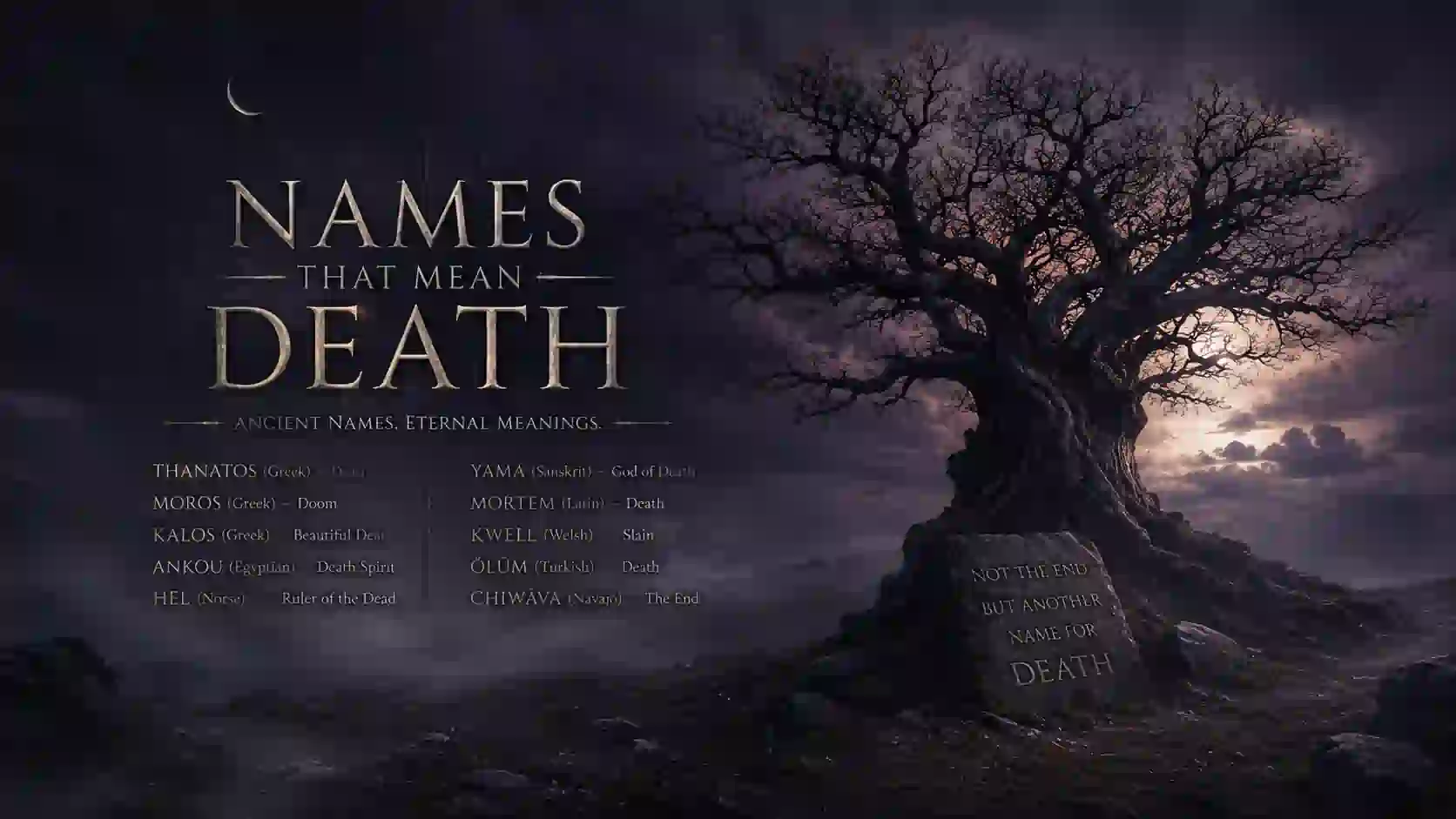
Finding a name that carries the weight of mortality feels like stepping into something ancient and untamed. You want a name that whispers of shadows, transformation, and the unspoken mysteries of existence.
Searching through lists online gives you surface-level options, but nothing that truly captures the depth you seek. This article brings together 150+ names that mean death from every corner of the world, complete with origins, stories, and meanings that reach far beyond the obvious.
Names connected to death have existed for thousands of years. Ancient cultures honored death gods through naming rituals. Warriors named their children after death spirits, hoping to instill fearlessness.
Modern parents choose these names for their unique edge, literary lovers pick them for character inspiration, and history buffs appreciate the deep cultural roots. Whatever draws you to names that mean death, you will find something here that resonates.
Complete Reference Table of Names That Mean Death
| Name | Origin | Meaning | Gender |
| Thanatos | Greek | Personification of death | Male |
| Morana | Slavic | Goddess of death and winter | Female |
| Kalma | Finnish | Death, grave | Female |
| Mot | Canaanite | God of death | Male |
| Shinigami | Japanese | Death spirit, death god | Neutral |
| Persephone | Greek | Bringer of destruction and death | Female |
| Azrael | Hebrew | Angel of death | Male |
| Hel | Norse | Goddess of the underworld | Female |
| Maveth | Hebrew | Death | Neutral |
| Yama | Sanskrit | God of death and justice | Male |
| Lilith | Hebrew | Night demon, bringer of death | Female |
| Ereshkigal | Sumerian | Queen of the dead | Female |
| Orcus | Roman | God of the underworld, punisher | Male |
| Mara | Sanskrit | Death, destruction | Female |
| Anubis | Egyptian | God of death and embalming | Male |
| Kali | Sanskrit | Goddess of death and time | Female |
| Seth | Egyptian | God of chaos and death | Male |
| Aita | Etruscan | God of the dead | Male |
| Libitina | Roman | Goddess of funerals and death | Female |
| Nergal | Babylonian | God of death and plague | Male |
Ancient Mythological Names That Mean Death
Mythology holds the richest collection of names that mean death. Every ancient civilization created deities to explain the final mystery of life. These gods and goddesses carried names that still carry immense power today.
Greek Death Names
Thanatos stands as the ultimate Greek death name. This figure served as the personification of peaceful death, unlike his sisters the Keres who represented violent death. Parents who choose Thanatos appreciate its direct connection to mortality without gore or violence. The name carries a gentle darkness, the kind that accepts death as a natural passage rather than something to fear.
Persephone married Hades and became queen of the underworld. Her name carries dual meanings related to destruction and spring growth. Choosing Persephone connects a child to the eternal cycle of death and rebirth. The name sounds beautiful spoken aloud, with its soft syllables hiding a core of iron strength.
Hades needs little introduction. The god of the underworld ruled over all departed souls with cold fairness. His name became synonymous with the afterlife itself. Parents who pick Hades value its instant recognition and the quiet dignity it represents.
Egyptian Death Names
Anubis guided souls to the afterlife and weighed hearts against the feather of truth. Egyptians held this jackal-headed god in the highest regard, associating him with protection during the most vulnerable transition. The name Anubis carries ancient wisdom, the kind earned through watching countless souls make their final journey.
Osiris ruled the dead after his own resurrection. His story of death and rebirth formed the core of Egyptian religious belief. Naming a child Osiris connects them to themes of transformation, renewal, and power that even death cannot extinguish.
Norse Death Names
Hel ruled the Norse underworld that shares her name. She received souls who died of old age or sickness, treating them with the same cold fairness her domain represented. The name Hel works perfectly as a standalone name or as part of longer combinations.
Hela offers a slightly softer variation of Hel, gaining recent popularity through modern media. The additional letter changes the sound just enough to make it feel fresh while keeping all the original meaning intact.
Cultural Names That Mean Death Across the World
Different cultures approach death names with unique perspectives shaped by their beliefs about the afterlife.
Japanese Death Names
Shinigami translates literally to “death god” or “death spirit.” Japanese folklore describes these beings as guides who escort souls from the world of the living. The name gained global recognition through anime and manga, making it familiar enough to pronounce easily while retaining its haunting origin.
Enma serves as the judge of the dead in Buddhist tradition. This king of hell decides where souls go based on their earthly actions. Parents choose Enma for its association with justice, balance, and the unbreakable law of karma.
Sanskrit and Hindu Death Names
Yama holds the distinction of being the first mortal to die, earning him the position of death god. He judges souls and determines their next incarnation. The name Yama speaks to cycles, to the understanding that endings create beginnings.
Kali embodies death, time, and ultimate transformation. This goddess destroys evil forces and shatters illusions about the material world. Parents who select Kali value strength, fierce protection, and the courage to face reality without flinching.
Mara represents death and destruction in Sanskrit, but also appears in Buddhist texts as a demon who tempted Buddha. This short, striking name fits well in modern contexts while carrying ancient weight.
Celtic Death Names
Arawn ruled the Welsh underworld called Annwn. Unlike many death gods, Arawn displayed honor and kept his promises to mortals who treated him fairly. The name carries a sense of noble darkness, the kind that operates by its own code of ethics.
Morrigan served as the Celtic goddess of death, war, and fate. She flew over battlefields as a crow, choosing which warriors would fall. The name Morrigan attracts those who appreciate feminine power unbound by gentle expectations.
Feminine Names That Mean Death
Girl names connected to death often carry a haunting beauty that contrasts with their dark meanings.
Death Goddess Names for Girls
Morana rules winter and death in Slavic mythology. Each spring she dies so the world can warm again, making her name synonymous with necessary endings. Morana sounds melodic while carrying the full weight of seasonal death and rebirth.
Libitina watched over funerals in ancient Rome. Morticians and funeral workers operated from her temple grounds. The name Libitina appeals to those who see beauty in caring for the dead, in performing the final acts of love and respect.
Ereshkigal commanded the Sumerian underworld with absolute authority. Even gods who entered her domain had to obey her rules. This longer name offers the cute nickname “Eresh” while maintaining its powerful full form.
Mictēcacihuātl ruled the Aztec afterlife alongside her husband. This goddess watched over the bones of the dead, which Aztecs believed would one day create new life. While long, this name rewards those who learn it with one of the most unique death names in existence.
Literary and Modern Feminine Death Names
Lenore gained its death connection through Edgar Allan Poe’s poetry. The repeated refrain of “lost Lenore” echoes through literature as a symbol of beautiful, tragic death. Parents choose Lenore for its classic sound and deep literary roots.
Mortica derives from the Latin word for death, made recognizable by the Addams Family matriarch. The name embraces darkness with elegance and warmth rather than cold separation.
Masculine Names That Mean Death
Boy names tied to death often project strength, mystery, and ancient power.
Death God Names for Boys
Mot ruled death for the Canaanites with an insatiable hunger that never ended. This short, sharp name hits with the force of its meaning. Mot works in modern contexts while remaining deeply connected to its ancient origins.
Nergal brought death and plague to Babylonian cities. This war god later became an underworld ruler, combining violence and death in one powerful name. Nergal suits those who want something truly ancient and nearly unknown in modern usage.
Orcus punished broken oaths in the Roman underworld. Unlike Pluto who ruled all dead, Orcus specifically targeted those who violated sacred promises. The name carries ideas of consequence and cosmic justice.
Ahriman represents destruction and death in Zoroastrian belief. This spirit of ultimate evil and darkness stands as one of the most intense death names available. Parents choose Ahriman for its philosophical weight rather than any literal death wish.
Angel of Death Names
Azrael comforts souls as they separate from bodies in Islamic, Jewish, and Christian traditions. Unlike frightening death figures, Azrael offers gentle guidance through the final transition. The name combines soft sounds with profound meaning.
Malak al-Mawt translates to “Angel of Death” in Arabic. While longer than most chosen names, it carries absolute clarity about its meaning and purpose.
Samael often gets identified as the angel of death in Jewish texts. His name contains the Hebrew word for poison, connecting him to the means of death itself.
Rare Names That Mean Death in Obscure Mythologies
Some of the most intriguing names that mean death come from lesser-known traditions.
Tuoni rules the Finnish underworld from his realm of darkness. His name appears in the Kalevala epic poetry, giving it literary credentials alongside mythological meaning.
Supay serves as the Inca god of death and the underground. Miners would offer sacrifices to Supay before entering his domain beneath the earth. This name connects to both death and the riches buried underground.
Kalma personifies death itself in Finnish mythology. She waits at gravesides, a stark figure representing the finality of the tomb. The name Kalma works equally well for any gender.
Omolu brings disease and death in Yoruba religion, but also offers healing to those who respect him. This duality makes Omolu a complex choice, acknowledging death while leaving room for recovery.
Names That Mean Death in Popular Culture and Literature
Modern media has created new death names or revived ancient ones for contemporary audiences.
Severus gained death associations through the Harry Potter series, where the character’s name hints at separation and finality. Latin origins connect this name to severity and cutting away.
Draven means “of the raven” and links to death through the bird’s long association with battlefields and corpses. The name sounds modern while carrying ancient death symbolism.
Keres named the violent death spirits who haunted Greek battlefields. Unlike their peaceful brother Thanatos, the Keres represented everything terrifying about death in war.
Vanth appears in Etruscan tomb paintings as a guide for the dead. This female death spirit carries torches and keys, lighting the way and unlocking the passage between worlds.
FAQ Section
What names literally translate to death?
Thanatos, Maveth, Kalma, and Mot translate directly to “death” in their respective languages. Thanatos comes from Greek, Maveth from Hebrew, Kalma from Finnish, and Mot from Canaanite. Each carries the exact meaning without metaphor or poetry.
Which name means angel of death?
Azrael serves as the angel of death across multiple religious traditions including Islam, Judaism, and Christianity. Malak al-Mawt provides the Arabic equivalent. Samael fills this role in certain Jewish interpretations, though texts differ on this identification.
Are there unisex names that mean death?
Yes, several names that mean death work for any gender. Shinigami from Japanese, Kalma from Finnish, and Maveth from Hebrew all function as gender-neutral options. Keres from Greek mythology can also work for any gender despite the spirits being female.
What girl name means death or darkness?
Morana represents death and winter in Slavic mythology. Kali embodies death and time in Hindu tradition. Libitina watched over Roman funerals. Persephone rules as queen of the Greek underworld. Each offers a feminine death name with deep cultural roots.
Which death name is most popular today?
Azrael ranks among the most commonly used death names in modern times, appearing in baby name registries across multiple countries. Persephone also charts regularly on popular name lists. Both offer recognizable sounds without being too common.
Can I use a death name without negative connotations?
Absolutely. Many death names represent transformation, change, and the natural cycle of life. Names like Persephone connect to rebirth as much as death. Azrael represents peaceful transition rather than violence. The meaning you and your family give the name matters more than ancient associations.
Names that mean death carry stories spanning every human civilization. From Greek Thanatos to Japanese Shinigami, these words hold the weight of humanity’s oldest questions about mortality, transition, and what lies beyond.
Take your time with these names. Consider how they sound spoken aloud, how they look written down, and how they resonate with your personal understanding of death as transformation rather than just ending.
Share this article with someone who loves the beauty hidden in darkness, save it for character inspiration, or keep exploring the names that speak most directly to you. The right name exists here among these ancient echoes.