What Does Despacito Mean? The Real Story Behind the Song That Broke the World
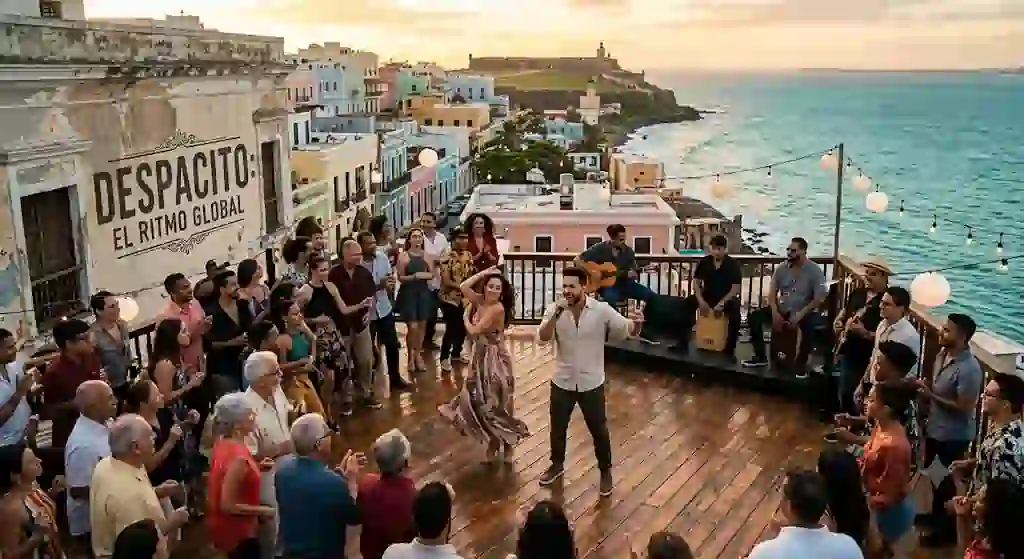
You pressed play on a summer afternoon in 2017. That guitar melody floated through your speakers.
You did not understand a single word, yet your body started moving. That moment captures exactly what made “Despacito” a global earthquake — a song so powerful it crossed language barriers, crashed YouTube servers, and became a cultural reset.
Let us unpack everything — the real meaning, the lyrics translated line by line, the remix that changed everything, and why this track still holds power years later.
Luis Fonsi Despacito: Where It All Began
Luis Fonsi sat in his Miami home studio in late 2015 with a simple idea brewing. He wanted to write a song that felt like the rhythm you dance to with someone you love — slow, intentional, and electric.
He scribbled the word “Despacito” on a notepad. That small word, meaning “slowly” with an affectionate twist, became the seed of history.
Fonsi co-wrote the track with Erika Ender, a Panamanian singer-songwriter who brought lyrical sharpness. Daddy Yankee jumped in later and added the reggaeton backbone that made the song undeniable. What emerged was not just a single — it became a movement.
The original version features Fonsi’s smooth tenor gliding over a sensual dembow beat while Daddy Yankee delivers one of the most recognizable rap verses in Latin pop history.
The track dropped on January 13, 2017. Within weeks, it topped charts across Latin America. But the real explosion came later.
The Despacito Remix: Justin Bieber Breaks the Language Barrier
April 2017 changed everything. Justin Bieber heard “Despacito” in a Colombian nightclub during his Purpose World Tour. The crowd’s reaction hooked him instantly. He called his manager that night and said three words: “I need in.”
The remix arrived on April 17, 2017. Bieber sang the opening verse in English, then switched to Spanish for the chorus — the first time he recorded in a second language.
His imperfect but sincere Spanish pronunciation became part of the charm. Millions of English speakers who had scrolled past the original suddenly stopped and listened.
This version turned a Latin hit into the defining song of 2017. The bilingual bridge added to the remix lyrics makes the song more approachable without weakening its original meaning. Luis Fonsi’s original melody stayed intact. Daddy Yankee’s reggaeton edge remained sharp. Bieber’s pop sensibility opened the floodgates.
Billboard tracked the result: 16 consecutive weeks at Number One on the Hot 100. That tied the all-time record held by Mariah Carey’s “One Sweet Day.” Spotify named it the most-streamed song of the decade. The remix proved something powerful — people crave authenticity, even when they need subtitles.
Despacito Meaning: The Word, The Feeling, The Deeper Layer
Let us define the core word with precision.
“Despacito” functions as the diminutive form of “despacio,” the Spanish adverb for “slowly.” Adding the suffix “-ito” transforms the meaning. It adds tenderness, intimacy, and affection.
A literal translation falls between “slowly” and “slowly, dear.” Consider it the distinction between saying “walk slowly” and “walk nice and slow with me.” Everything is carried by that shift.
So what does Despacito mean when you zoom out to the full song?
The lyrics describe an intimate encounter told through poetic, sensual language. Fonsi’s narrator wants to savor every moment — every breath, every touch, every kiss — without rushing toward any finish line.
The song paints physical desire wrapped in romance. He sings about kissing her neck slowly, whispering in her ear, memorizing every detail of her body. The story takes place in the area where seduction and love songs collide.
The meaning goes deeper than translation. “Despacito” captures a cultural value common across Latin cultures — the art of taking things slow, of enjoying the process rather than sprinting to the conclusion. That philosophy resonated globally because modern life rarely allows this kind of slowness.
Despacito Lyrics in English: Complete Line-by-Line Translation
What follows is the full English translation of the original lyrics. This captures the poetic meaning rather than a robotic word-for-word conversion.
Verse 1 (Luis Fonsi):
Yes, I know I’m running late to this moment
But that’s how this path goes
I want to breathe your neck slowly
Let me whisper things in your ear
So you’ll remember when you’re not with me
Pre-Chorus (Luis Fonsi):
Slowly
I want to kiss you as I slowly undress you.
Sign the walls of your inner labyrinth
And turn your body into a manuscript
Chorus:
I want to feel you slowly, so very slowly
Let me tell you things in your ear
So you’ll remember when you’re not with me
Stay like this, just a little closer
Daddy Yankee’s Verse:
Let me push past your danger zones
Until I make you scream
And forget your last name
Slowly…
This translation preserves the romance and physicality of the original Spanish. The “manuscript” metaphor deserves special attention — it transforms the lover’s body into something worth reading, studying, and memorizing. That single image captures the song’s entire philosophy.
Despacito Lyrics Justin Bieber (English): What He Actually Sings
The remix lyrics in English start with Bieber’s entirely new intro before blending into the original Spanish chorus.
Justin Bieber’s Opening Verse:
Come and move that in my direction
So thankful for that, it’s such a blessing, yeah
Turn every situation into heaven
Yeah, your body is an island I want to explore
Pre-Chorus (Justin Bieber, in Spanish):
Slowly
I want to breathe your neck slowly
Let me whisper things in your ear
So you’ll remember when you’re not with me
After this, Bieber joins Fonsi for the chorus in Spanish. The remix preserved the original song structure while adding Bieber’s English-language entry point. His verse frames the encounter as almost spiritual — “a blessing” that transforms situations “into heaven.”
Despacito YouTube Views: The Numbers That Defied Logic
YouTube became the stage where Despacito wrote its legend.
The music video dropped on January 12, 2017, directed by Carlos Pérez. It follows Luis Fonsi and Daddy Yankee through La Perla, a historic neighborhood in San Juan, Puerto Rico. The visuals celebrate community, dance, and street culture without heavy production tricks. Real people fill the frame. Real dancing. Real joy.
Then the numbers started climbing:
- 1 billion views — reached in 97 days, shattering the previous record
- 2 billion views — reached in 154 days
- 3 billion views — first video in YouTube history to hit this milestone
- 4 billion views — achieved on October 11, 2017
- 5 billion views — reached in April 2018
- 6 billion views — first video ever to cross this threshold
- 7 billion views — hit in February 2019
- Current total (as of 2025) — over 8.5 billion views, making it the second most-viewed YouTube video of all time
For four years, Despacito held the crown as the most-viewed video on the platform. “Baby Shark” eventually overtook it, but that does not diminish the achievement. Despacito proved a non-English song could dominate a platform built on global audiences.
The YouTube views matter beyond statistics. Each view represents someone who chose to spend four minutes inside Puerto Rican culture. That cultural exchange, multiplied billions of times, changed how the music industry thinks about language and reach.
Who Sings Despacito: The Artists Behind the Phenomenon
Let us credit every artist properly.
Luis Fonsi — lead vocalist and primary songwriter. The birthplace of Luis Alfonso Rodríguez López-Cepero is San Juan, Puerto Rico. He spent nearly two decades building a successful Latin pop career before Despacito.
Albums like “Eterno” and “Palabras del Silencio” earned him Latin Grammy nominations. Despacito transformed him from a known Latin star into a global name.
Daddy Yankee — featured artist and co-writer. San Juan is where Ramón Luis Ayala Rodríguez was born. He earned the title “King of Reggaeton” honestly — his 2004 hit “Gasolina” introduced reggaeton to global audiences. His contribution to Despacito gave the track its rhythmic muscle and street credibility.
The remix has Justin Bieber as a featured performer. The Canadian pop superstar took a risk singing in Spanish. That risk paid off massively. His involvement opened doors the original could not reach alone.
Erika Ender — co-writer often overlooked in mainstream coverage. The Panamanian singer-songwriter shaped the lyrics with Fonsi during their writing sessions. Her fingerprints appear in the song’s poetic sensibility.
Andrés Torres and Mauricio Rengifo — producers who built the track’s sonic architecture. The Colombian duo crafted the blend of acoustic guitar, reggaeton rhythm, and pop polish that made the song infectious across formats.
When Did Despacito Come Out? A Full Timeline
Clarity matters for anyone doing research or writing about this song. Here is the complete release timeline:
| Event | Date |
| Original single release | January 13, 2017 |
| Music video premiere (YouTube) | January 12, 2017 |
| Album release (“VIDA”) | February 1, 2019 |
| Remix with Justin Bieber | April 17, 2017 |
| Remix hits Billboard Hot 100 #1 | May 27, 2017 |
| Spends 16th week at #1 | September 2017 |
| Passes 3 billion YouTube views | August 4, 2017 |
| Passes 5 billion YouTube views | April 5, 2018 |
| Passes 7 billion YouTube views | February 2019 |
The original release date matters because it clarifies a common confusion. Many people assume the song launched with the Bieber remix. The original had already spent three months climbing Latin charts and building organic momentum before Bieber joined.
The Despacito Meme Phenomenon: When Culture Eats Itself
You cannot fully understand Despacito without acknowledging the memes.
“Alexa, play Despacito” emerged in mid-2017 as a sarcastic command — the ultimate expression of something being so popular it became a punchline. Users posted the phrase under serious videos, tragic news stories, and awkward social media moments.
The irony worked because Despacito represented pure, uncritical joy. Playing it during a funeral discussion created absurdist humor through contrast.
“Despacito Spider” took a different path. This meme originated in the Roblox gaming community. A player-created spider character with absurd animations got paired with Despacito as background music.
The dissonance — a creepy spider dancing to a sensual love song — captured something uniquely internet-native. Despacito Spider Roblox videos accumulated millions of views, introducing the song to a generation of younger listeners who were toddlers when the original hit.
These memes extended the song’s lifespan far beyond normal pop music cycles. What typically fades after one summer persisted because internet culture kept finding new ways to reference, remix, and celebrate the track. The joke was always layered — you mocked the overexposure while secretly still enjoying the song.
Despacito Chords and Musical Structure: How Anyone Can Play It
The song’s musical simplicity contributed to its viral spread.
The guitar backbone uses four chords on repeat: B minor, G major, D major, A major. That progression runs through the entire song without variation. This accessibility meant anyone with basic guitar skills could cover it within minutes of picking up the instrument.
Despacito Guitar Chords (Capo on 2nd fret for easier playing):
- Progression of the verse/chorus: Bm–G–D–A
- Strumming pattern: Down, down, up, up, down, up (reggaeton feel)
- Tempo: 89 BPM
For piano players, the same chords translate directly. Sheet music became one of the most downloaded pieces of 2017 across music education platforms.
Despacito piano sheet music and violin sheet music flooded online marketplaces as students requested the song during lessons.
The musical simplicity served a purpose. Complex chord changes would distract from the groove. The four-chord loop creates a hypnotic quality — your brain locks into the pattern and the body follows. That is dance music engineering at its finest.
Who Wrote Despacito and Who Made It: Full Credits
Songwriting credits deserve precision because creators often get reduced to performers in public memory.
Writers:
- Luis Fonsi
- Erika Ender
- Ramón Ayala (Daddy Yankee)
- Justin Bieber (remix version only)
- Jason Boyd (remix version only)
- Marty James (remix version only)
Producers:
- Andrés Torres
- Mauricio Rengifo
Music Video Director:
- Carlos Pérez
The song was recorded in Miami and Los Angeles across multiple sessions in late 2016 and early 2017. Erika Ender described the writing process as one of the fastest creative sessions of her career. The core idea came together in under two hours, built around the concept of taking physical intimacy slowly and deliberately.
Frequently Asked Questions
What does Despacito mean in English?
“Despacito” translates to “slowly” with an affectionate, intimate tone. The “-ito” suffix in Spanish adds tenderness, so the full feeling is closer to “nice and slow” or “slowly, darling.”
What is Despacito about?
The song describes an intimate romantic encounter. Luis Fonsi’s narrator wants to savor every physical moment with his partner without rushing. He sings about kissing, touching, and memorizing her body through the lens of passion and romance.
Who sings Despacito?
Puerto Rican singer Luis Fonsi performs the lead vocals. Reggaeton pioneer Daddy Yankee delivers the featured rap verse. On the remix version, Canadian pop star Justin Bieber adds an English-language introduction and shares vocal duties.
When did Despacito come out?
The original version released on January 13, 2017. The Justin Bieber remix followed on April 17, 2017. The music video premiered on YouTube one day before the single’s official drop.
What does Despacito mean in Spanish?
In Spanish, “despacito” means “very slowly” with a soft, affectionate quality. The word comes from “despacio” (slowly) plus the diminutive suffix “-ito,” which adds warmth and endearment. The term carries romantic undertones specific to Latin American Spanish dialects.
Who wrote Despacito?
Luis Fonsi and Erika Ender co-wrote the original version. Daddy Yankee contributed his rap lyrics. For the remix, Justin Bieber, Jason Boyd, and Marty James added writing credits for the new English-language segments.
Cultural Impact: Beyond Streaming Numbers
Despacito altered the trajectory of Latin music in the global marketplace. Before 2017, Spanish-language songs occasionally crossed over — “Macarena,” “Livin’ la Vida Loca,” “Gasolina” — but no non-English track had dominated this thoroughly or this long.
Record labels noticed. Investment in Latin artists surged. Streaming platforms created dedicated Latin music divisions.
Rosalía, Bad Bunny, J Balvin, and Karol G built global careers on foundations Despacito strengthened. The song did not just succeed — it restructured industry assumptions about what “mainstream” means.
This matters for understanding the song’s full significance. Despacito was not merely a hit. It functioned as a door that opened and stayed open.
The Right Way to Experience Despacito Now
Listen to the original version first. Notice the guitar work. Pay attention to Fonsi’s vocal control during the pre-chorus build. Then try the remix and observe how Bieber’s addition changed the entry point for English-speaking audiences without disrupting the song’s core identity.
Watch the music video and see La Perla’s streets, the dancers, the community energy that no green screen could replicate.
The song has layers worth appreciating beyond its inescapable presence during 2017. Understanding the lyrics deepens the experience. Knowing the backstory adds texture. Recognizing the chord progression lets you play along. Each layer connects you more deeply to why this track became what it became.